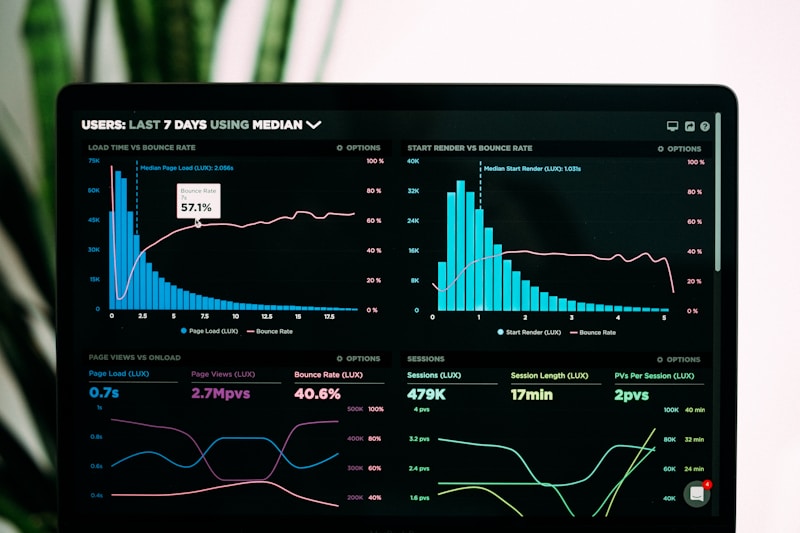
If you think AI in customer service is just about chatbots answering basic questions, you are missing the bigger picture. The real transformation is happening behind the scenes—in how we measure, understand, and improve customer interactions.
AI customer service analytics is reshaping how businesses understand their customers. According to Gartner, by 2026, 80% of customer service organizations will use AI-powered analytics, up from just 25% in 2023. This is not a futuristic prediction—it is happening right now.
Why AI Analytics Matters More Than Ever
Traditional analytics tell you what happened. AI analytics tells you why—and what to do next.
Here is what AI customer service analytics can do that traditional tools cannot:
- 1Predict customer churn — Identify at-risk customers weeks before they leave
- 2Detect sentiment in real-time — Understand emotions across every interaction
- 3Automate quality assurance — Analyze 100% of interactions, not just samples
📋 Table of Contents
7 AI Metrics Transforming Customer Service
✓ 1. Customer Effort Score Prediction
AI does not just measure customer effort—it predicts it. By analyzing patterns across thousands of interactions, AI can forecast which customers will struggle before they even reach out. According to McKinsey, reducing customer effort leads to 40% more loyalty than reducing prices.
✓ 2. Emotion AI Score
Voice and text analytics now detect frustration, satisfaction, and intent with 87% accuracy. This goes beyond simple positive/negative detection—AI understands nuance, sarcasm, and context. Salesforce research shows that customers who feel understood are 3x more likely to recommend the brand.
✓ 3. First Contact Resolution Prediction
AI analyzes historical data to predict which issues can be resolved in a single interaction—and which need escalation. Deloitte found that organizations with AI-powered FCR prediction see 15-20% improvement in first contact resolution rates.
✓ 4. Agent Assist Recommendations
Real-time AI suggests responses, next-best actions, and relevant knowledge base articles to agents while they are on calls. Aberdeen Research reports that AI agent assist tools reduce average handle time by 25% while improving quality scores.
✓ 5. Customer Lifetime Value Prediction
AI analyzes service interactions to predict future customer value. This helps prioritize resources—investing more in high-value relationships while streamlining service for lower-value interactions. According to Gartner, this predictive approach increases service ROI by up to 30%.
✓ 6. Self-Service Success Rate
AI tracks not just whether customers used self-service, but whether they were successful. This metric reveals the true effectiveness of knowledge bases, chatbots, and FAQ sections. MIT Technology Review found that 67% of customers prefer self-service when it actually works.
✓ 7. Sentiment Trend Analysis
Beyond individual interactions, AI identifies sentiment trends over time—detecting emerging issues before they become widespread problems. Qualtrics research shows that early detection of negative trends reduces churn risk by up to 35%.
Data Comparison: AI vs Traditional Analytics
| Metric | Traditional Analytics | AI Analytics |
|---|---|---|
| Coverage | 2-5% of interactions | 100% of interactions |
| Speed | Days/weeks for reports | Real-time insights |
| Predictive Ability | Retrospective only | Predicts future outcomes |
| Sentiment Analysis | Manual sampling | Automated, real-time |
| Cost per Insight | High (manual effort) | Low (automated scale) |
Sources: Gartner, McKinsey, Deloitte, Aberdeen Research
💡 Key insight: The biggest advantage of AI analytics is not faster reporting—it is moving from reactive to proactive customer service. You can now solve problems before customers even know they have them.
⚠️What to Watch Out For
- ✗Data Privacy Concerns — AI analytics requires access to customer data. Ensure compliance with GDPR, CCPA, and local regulations. Always be transparent about what data you collect and why.
- ✗Algorithm Bias — AI models can perpetuate biases present in historical data. Regularly audit your AI tools for fairness across customer demographics.
- ✗Over-Automation — Do not let AI replace human judgment entirely. Some situations absolutely require human empathy and intervention.
Getting Started with AI Customer Service Analytics
You do not need to overhaul your entire stack to benefit from AI analytics. Here is a practical starting path:
- Audit your current data: What customer interaction data are you already collecting? (Emails, chat logs, call recordings, survey responses)
- Start with one metric: Choose the metric that aligns most closely with your business goals—customer churn, CSAT, or first contact resolution.
- Pilot with a dedicated tool: Platforms like Gong, Chorus, or Zendesk AI offer ready-to-deploy analytics with minimal setup.
- Train your team: AI is only as good as the actions it drives. Ensure agents and managers understand how to interpret and act on AI insights.
- Iterate and expand: Once you see results, add more metrics and deeper analysis.
💡 Key insight: Most companies fail not because AI analytics is too complex, but because they try to do too much at once. Start small, measure results, and expand gradually.
The Future Is Proactive
The transformation from reactive to proactive customer service is the biggest shift in the industry in decades. AI customer service analytics is not just a tool for measuring the past—it is your window into the future of every customer relationship.
According to World Economic Forum, AI-powered customer service will handle 80% of all customer interactions by 2030. But that does not mean humans are out of the loop—it means humans will focus on the complex, high-empathy interactions that truly matter.
📚 Explore More
- AI Career Protection Guide – Comprehensive guide to securing your job
- AI Skills for Career Growth – Learn the skills that matter
- Best AI Customer Service Platforms – Top tools comparison
- AI-Proof Customer Service Skills – Skills that set you apart
- About Us – Learn more about our mission
- Contact – Get in touch
Ready to Future-Proof Your Career in AI Customer Service?
Learn the skills that top companies are looking for. Get our comprehensive guide to succeeding in the AI-powered customer service landscape.
What is your experience with AI customer service analytics?
Are you using AI to measure customer interactions? What metrics have made the biggest difference for your team? Share your thoughts in the comments below.